Zoox
- 4.9
- Rating
- 100.00K
- Installs
- Free
- Price

 Analysis by App-foxy
I approached Zoox as a practical travel companion rather than as another ordinary ride-booking app. Its promise is unusually direct: the vehicle handles the driving while I concentrate on getting where I need to go. That makes the experience feel less like ordering a conventional car and more like testing a new kind of urban transport workflow, where the important question is not who is behind the wheel, but how smoothly the entire trip moves from request to arrival.
Zoox, Inc. develops this free Travel & Local app, and its Everyone age rating makes it approachable for a broad audience. The app has attracted over 100 thousand installs and holds a 4.9 average from around 1.8 thousand ratings, which suggests that early users are responding positively to the experience. I would still treat those figures as a sign of interest rather than a guarantee that every journey will feel effortless, because autonomous transport depends heavily on the locations and situations in which the service is available.
From deciding to travel to completing the ride
I start with the decision that shapes the whole experience: whether this is a trip where I want a dedicated ride and can follow a clearly guided pickup. Thinking about that before I open the app helps me set realistic expectations for speed, because a smooth journey depends on more than the vehicle’s movement. From there, I look at what happens when the request and the real-world handoff get busy.
You May Also Like

 Blood Strike: 2.5 Anniversary
Blood Strike’s Loadouts Turn Every Drop Into a Tactical Gamble
A close look at Blood Strike’s custom loadouts: how fast access to signature weapons reshapes its battle royale rhythm, rewards preparation, and narrows the gap between fights.

 Pandora - Music & Podcasts
Pandora’s Music Is Easy to Start, but Harder to Recover
Pandora’s strength is its low-effort path from a seed to a station. Its weak spot is how much confidence it asks you to place in connection, setup, and quiet recovery.

 8 Ball Pool
 Is Built on Rivalries, Rematches, and Routine
A close look at the rivalries, rematches, shared routines, and unanswered safety questions that turn a quick pool match into a persistent mobile community.

 Samsung Music
’s Quiet Strength Is Playing What You Already Own
Its reach comes less from spectacle than from dependable access to a personal library. That simplicity is both the app’s strongest retention engine and its ceiling.

 AccuWeather: Weather Radar
AccuWeather Review: A Quick, Clear Forecast for Everyday Decisions
For everyday plans, the best forecast is the one you can understand quickly. AccuWeather makes rain timing, radar, and local conditions easy to act on, with a few trade-offs.

 Hill Climb Racing
Why Hill Climb Racing Still Turns Crashes Into One More Run
A tiny car, a bumpy hill and one more upgrade: Hill Climb Racing keeps resurfacing because its simple chaos makes every near-miss feel personal.
More From Our News Desk



The starting condition matters more than it first appears
The best way to understand Zoox is to begin with the moment before opening it. I would use it when I already know that I need a ride and want the transport itself to be the focus, not the act of driving. That could mean leaving a busy area, arranging a trip when I do not want to deal with parking, or choosing a ride experience that does not depend on a traditional driver. The app is most interesting when the usual alternative feels inconvenient rather than when I simply want the cheapest or most familiar option.
This distinction is important. A standard taxi or rideshare app is built around a well-known sequence: enter a destination, see an estimated service, wait for a driver, and get in when that person arrives. Zoox changes the central handoff. The ride is associated with an autonomous vehicle, so the user has to think more carefully about recognizing the correct vehicle and following the app’s instructions at the pickup point.
Before beginning, I would make sure my destination and pickup location are clear, especially in a crowded place with several entrances, lanes, or nearby roads. That is not unique to Zoox, but it matters more when I cannot rely on a driver calling out or waving from a window. A few seconds spent checking where I am standing can prevent the most avoidable part of the journey: being in the right general area but not at the right meeting point.
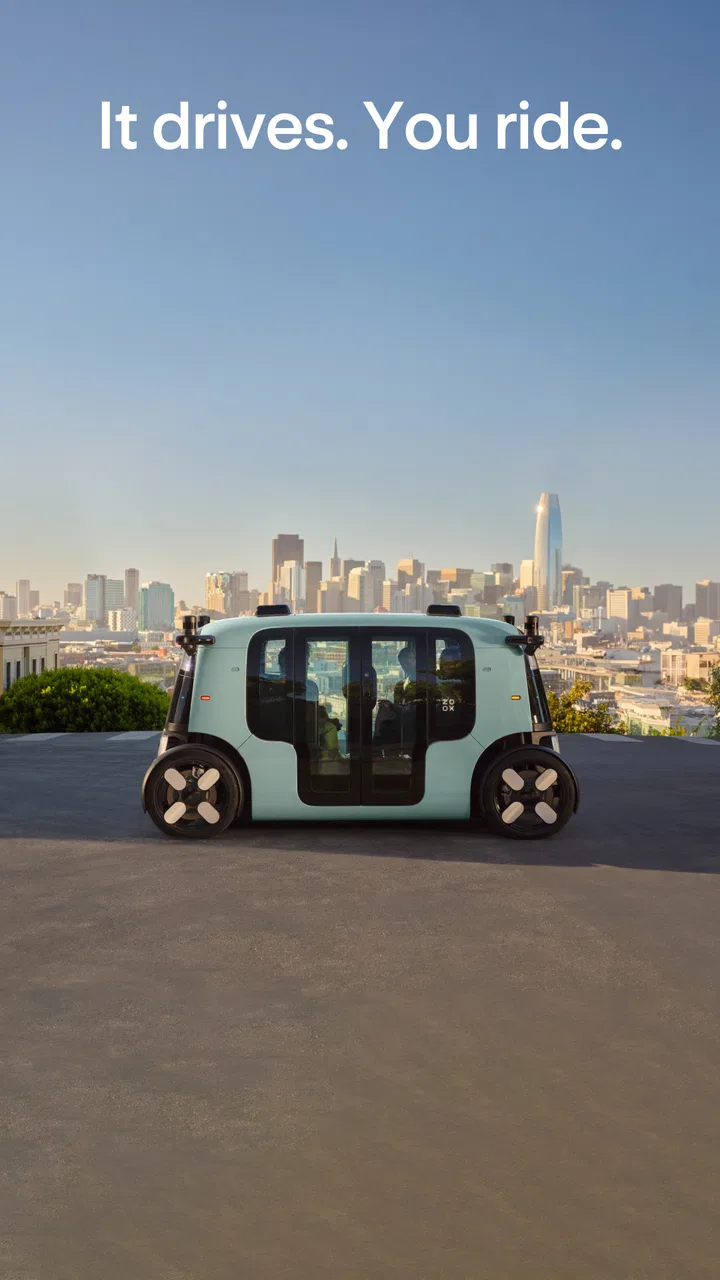
The app’s simple store summary, “It drives. You ride.”, captures the basic division of responsibility, but it does not describe the small decisions that make the workflow comfortable. I still need to be ready, attentive, and able to identify the ride. Autonomous driving removes one task from the trip; it does not remove the need for good coordination.
Requesting the trip and following the first instructions
Once I open Zoox, I would treat the first stage as a confirmation exercise. I want to know that the pickup location reflects where I can realistically wait, not merely where a map pin happens to land. In a conventional rideshare, a driver may adjust after seeing me or send a message. With an autonomous service, the app becomes more important as the source of the meeting instructions, so I would read the prompts rather than tapping through them automatically.
This is one of the more useful habits for a first ride: keep the phone available after requesting the vehicle. The screen is not only for placing the order. It is part of the handoff between the digital request and the physical vehicle. If the pickup point changes or the app gives a more precise direction, missing that update can make the experience feel confusing even when the underlying ride is working correctly.
I also would not plan a tight connection around the most optimistic possible arrival. When I need to catch a train, meet someone at an exact time, or reach an appointment with no flexibility, I prefer a transport option with a familiar backup path. Zoox may be a strong choice for a planned urban trip, but a new mobility service should not be treated as the only link in a chain when one delay would cause a larger problem.
The pickup handoff is the real test
The most distinctive part of the workflow is the transition from app to vehicle. With a human driver, recognition often happens through a face, a voice, or a quick exchange. With Zoox, I would expect the app and the vehicle to carry more of that responsibility. I need to stay alert for the correct arrival, check that the vehicle corresponds to my booking, and follow the boarding guidance rather than assuming the process will feel exactly like entering a taxi.
That handoff creates a different kind of friction. It can be calmer because there is no need to explain the destination to a driver or make small talk. At the same time, it can feel less forgiving if I am distracted, standing behind an obstruction, or handling luggage. My practical advice is to choose a visible waiting position, keep the phone charged enough for the full interaction, and avoid treating the pickup as something I can manage entirely from a distance.
This is also where Zoox may appeal to riders who dislike the uncertainty of driver-based services. The experience is not shaped by a driver’s personality, route preferences, or conversation. For some people, that consistency will be the main attraction. For others, the absence of a human who can improvise may make the process feel less reassuring when the street situation becomes complicated.
Inside the vehicle: letting the system do its job
After boarding, the experience shifts from coordination to observation. I would settle in, verify that I am in the correct vehicle, and let the ride proceed instead of trying to micromanage every movement. The appeal is precisely that I can use the travel time without taking responsibility for steering, navigation, or parking. It is a useful change of mindset: I am no longer supervising a driver, but I am also not operating the vehicle myself.
That can make short city trips feel more productive. I could review a schedule, organize my belongings, or simply look out of the window without worrying about traffic decisions. It may also suit riders who find conventional driving tiring or stressful. The value is not only speed; it is the mental space created when driving is removed from the passenger’s list of tasks.
Still, I would avoid assuming that autonomy means every ride will feel identical. Urban streets contain construction, unusual obstacles, temporary closures, pedestrians, and other road users. A vehicle designed to manage driving must respond to those conditions, and a passenger may notice moments of caution or hesitation that would not occur in a familiar car driven by a person. I see that as part of the adjustment period, not automatically as a defect, but riders who expect a completely invisible technology may need time to become comfortable.
Arrival and the final handoff
The trip is not finished the instant the vehicle reaches the destination. The last handoff is from the ride to the place I actually need to enter. I would check the app’s arrival information, gather everything before leaving, and make sure I understand where I am stepping out. This is especially worthwhile near large buildings or busy pedestrian areas, where a vehicle can arrive close to the destination without stopping at the exact door I had imagined.
That small distinction is easy to overlook when comparing autonomous transport with a human-driven ride. A driver may respond to a request such as “could you let me out by this entrance?” depending on the road and local rules. With Zoox, I would plan around the designated destination and be prepared to walk the final stretch. For most ordinary trips, that is insignificant. For someone carrying heavy bags, traveling with a mobility concern, or meeting another person at a precise entrance, it becomes a meaningful planning detail.
The outcome I want is therefore broader than simply reaching a map pin. A successful Zoox trip means I requested the ride accurately, found the vehicle without confusion, felt comfortable during the autonomous journey, and exited in a place that works for the next part of my day. When all four pieces line up, the experience can feel remarkably clean because the usual driver-related negotiations disappear.
What makes it different from familiar alternatives
Compared with a conventional taxi, Zoox offers a more technology-led experience and removes the need to coordinate with a person behind the wheel. That can be attractive when privacy, consistency, or the novelty of autonomous travel matters to me. A taxi may still be better when I need a driver who can make a quick judgment about an unusual drop-off, help with a complicated curbside situation, or respond naturally to changing plans.
Compared with a standard rideshare app, the biggest difference is not the booking screen but the responsibility at the pickup and drop-off points. Traditional rideshare services often make the driver part of the identification and problem-solving process. Zoox places more emphasis on the app-to-vehicle connection. I would choose it when I am comfortable following a defined process; I would choose a driver-based alternative when flexibility and human assistance are more important than the autonomous format.
Compared with public transport, Zoox can offer a more direct trip without asking me to follow a fixed route or timetable. Public transport remains the better fit when I want a familiar network, a predictable fare structure, or the ability to travel without arranging a vehicle individually. Zoox is more compelling for a point-to-point journey where the convenience of a dedicated ride outweighs the simplicity of boarding a bus or train.
A realistic everyday scenario
Imagine I have spent an afternoon in a busy commercial district and need to reach a hotel across town with a small suitcase. I open Zoox before leaving the building, select the pickup point, and move to a visible place rather than waiting in the middle of a crowd. I keep the phone ready, watch for the vehicle, and use the app’s directions to complete the boarding step. Once inside, I can review the evening’s plans instead of navigating unfamiliar streets or searching for parking.
On arrival, I do not rush out blindly. I check that I have my bag, confirm that the destination is correct, and walk from the stopping point to the hotel entrance. In this scenario, Zoox is useful because it turns a potentially tiring transition into a single coordinated ride. The trade-off is that I need to be more deliberate at the handoffs than I might be with a driver who can see me, answer a question, or adjust informally.
A different example shows where I might skip it. If I am carrying several large items, meeting someone at a hard-to-find entrance, and working under a strict deadline, I would prefer an option with a human driver or a transport route I already know. The autonomous format is not automatically the best answer just because it is more advanced.
Practical habits that improve the experience
My first tip is to treat pickup accuracy as part of the booking, not as an afterthought. I would select a location where a vehicle can reasonably meet me and where I can see what is happening around me. A technically correct pin can still be a poor meeting place if it leaves me behind a building, across a busy road, or among several similar entrances.
My second tip is to keep the entire handoff in view. I would avoid putting the phone away immediately after requesting the ride, because the important information may arrive between the request and boarding. This is a subtle difference from using an app only to summon a driver. In Zoox, the phone is more central to recognizing and completing the transition into the vehicle.
My third tip is to leave a little flexibility after the ride, especially for a first attempt or an unfamiliar destination. I would not judge the service solely by whether the vehicle reaches the correct area; I would also allow time to orient myself, collect my belongings, and walk to the final entrance. That buffer makes the experience less stressful and reveals whether the service fits my actual routine.
My fourth tip is to decide in advance whether autonomy is the feature I want or merely the feature I am curious about. Curiosity can justify trying Zoox once, but repeat use should depend on whether the complete journey is genuinely easier for me. If I regularly need flexible instructions, conversation, physical assistance, or last-minute changes, the usual alternatives may remain more practical.
Where the flow breaks down
The workflow is most vulnerable at the points where digital certainty meets a messy physical environment. A crowded pickup area can make vehicle recognition harder. A destination with multiple entrances can make the final walk less obvious. A rider who is not watching the app may miss an important instruction. None of these issues cancels the value of autonomous transport, but they show that the app is not a magic layer that removes every travel problem.
There is also a psychological adjustment. Some passengers may feel uneasy when the vehicle behaves cautiously or when there is no driver to answer an immediate question. Others may find the quiet and independence refreshing. My reaction would depend on the trip: for a routine ride, I value the reduced interaction; for an unusual situation, I value the reassurance of a person who can interpret context.
Another limitation is suitability. I would not make Zoox my automatic choice for every journey simply because it is free to download and designed for general audiences. The app’s price is free, but the real cost of using any transport service includes time, availability, convenience, and the consequences of a difficult pickup. A free app can still be the wrong tool if it adds uncertainty to an important trip.
The current version, 26.07.405, requires an operating system version 12 or newer. That is a straightforward technical checkpoint before installation, particularly if I am using an older phone. It is also worth remembering that software compatibility and transport availability are separate questions: being able to install the app does not by itself make every journey possible in every place.
Who should try it, and who should wait
I think Zoox is best suited to curious urban travelers, people who want a direct ride without driving, and passengers who appreciate a quieter, more structured alternative to a driver-based service. It may also appeal to anyone who wants to reclaim attention during a trip rather than spend it navigating traffic or searching for parking.
I would be more cautious if I needed extensive help with luggage, had a destination where curb access is complicated, or could not comfortably follow app-based pickup instructions. Families and groups should also think about the complete boarding and exit process rather than focusing only on the novelty of autonomous driving. The right choice depends on how much independence the journey demands from the passenger.
After using the app as a complete journey rather than judging it by its short store description, my view is positive but practical. Zoox offers a distinctive travel experience because it changes the driver handoff, not merely the booking interface. When the pickup is clear and the destination is straightforward, that difference can make the ride feel calm, private, and refreshingly simple. When the environment is confusing or the trip requires human improvisation, a taxi, rideshare, or public transport option may still be the smarter choice.
My recommendation is to try Zoox on a low-pressure trip first. Choose a visible pickup point, keep the app open through boarding, allow time for the final walk, and judge the service by the whole workflow. If that sequence fits naturally into your day, this Travel & Local app from Zoox, Inc. can become more than a novelty: it can be a genuinely useful way to let the vehicle handle the driving while you focus on the ride.
FAQs for Zoox
01What is Zoox, and what features does it offer?
Zoox is a cutting-edge app designed to revolutionize urban mobility. It offers features such as real-time ride tracking, AI-driven routing, and seamless payment options. The app aims to provide a safe, efficient, and eco-friendly transportation solution by integrating autonomous vehicle technology with intuitive user interfaces.
02Is Zoox available in my city, and how can I check coverage?
Zoox is gradually expanding its service areas, focusing initially on major metropolitan cities. To check if Zoox is available in your location, you can visit their official website or download the app, which will prompt you to enter your location to verify service coverage and availability.
03What safety measures does Zoox implement for passengers?
Zoox prioritizes passenger safety by implementing rigorous safety protocols, including AI-powered monitoring systems and real-time vehicle diagnostics. The autonomous vehicles are equipped with multiple cameras and sensors to ensure safe navigation. Additionally, Zoox provides in-app emergency support features for immediate assistance if needed.
04How does Zoox handle data privacy and security?
Zoox is committed to protecting user data and employs robust encryption methods to secure personal information. The app only collects data essential for its operation, and users have the option to manage data sharing preferences. Zoox also complies with all relevant data protection regulations to ensure user privacy is safeguarded.
05What are the payment options available on Zoox?
Zoox offers a variety of convenient payment options, including credit and debit cards, digital wallets, and in-app payment solutions. Users can easily add or update payment methods within the app, allowing for seamless transactions. Zoox also provides fare estimates before booking, ensuring transparency in pricing.
Pros
- User-friendly interface enhances experience.
- Wide range of customization options available.
- Seamless integration with social media platforms.
- Frequent updates with new features and fixes.
- Comprehensive tutorial for new users.
Cons
- Limited offline functionality can be restrictive.
- Some features require in-app purchases.
- Occasional bugs during high traffic periods.
- Battery consumption could be optimized.
- Customer support response time is slow.

Zoox
Gallery